

AI energy powers every chatbot conversation, AI-generated image, and AI writing assistant you use. Every time you ask ChatGPT a question, generate an image from a written prompt, or have AI draft an email or summarize a document, electricity is at work behind the scenes.
Most of us never think about it. We ask a question and wait a few seconds for an answer. But those answers come at a cost.
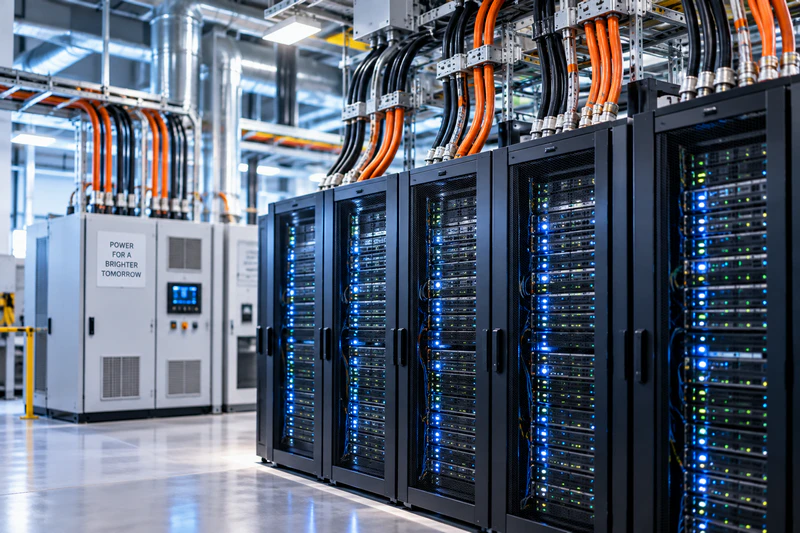
Today’s AI systems rely on vast networks of specialized computers running around the clock in data centers worldwide. Training powerful AI models, responding to billions of user requests, manufacturing advanced computer chips, and cooling enormous server facilities all require electricity—often in staggering amounts.
As AI becomes more capable and more deeply woven into everyday life, AI energy demand continues to grow. Yet not every AI task consumes electricity in the same way. Some require brief but enormous bursts of computing power. Others create a constant, 24-hour demand that never stops.
So where does all the electricity go? The answer begins with understanding how modern AI works—and why some parts of the process consume far more energy than others.
Where AI uses electricity
Most people experience AI when they ask a chatbot like ChatGPT a question, generate an image from a written prompt, or use an AI writing assistant in Word or Gmail to draft an email or summarize a document.
But that’s only the visible part of AI’s electricity use.
Long before an AI system reaches users, engineers must first train AI models—the software systems that power tools like ChatGPT. During training, the models analyze enormous amounts of data to learn patterns and produce useful responses.
Electricity is also required to manufacture specialized computer chips and build the data centers that support them. Once deployed, those systems continue consuming power every hour of every day.
Broadly speaking, AI uses electricity in four ways:
- Training AI models — Before an AI system can answer questions, recognize images, or perform other tasks, it must first be trained. That process requires vast computing power running for days, weeks, or even months.
- Running AI at scale — Every search, chatbot response, image, translation, or voice command requires computers to perform millions or billions of calculations. A single request uses relatively little electricity, but billions of requests each day create a continuous demand.
- Building the hardware — AI depends on advanced computer chips, servers, networking equipment, and other specialized hardware. Designing and manufacturing this technology requires significant amounts of energy long before it is installed in a data center.
- Operating the infrastructure — AI facilities run around the clock. Beyond powering processors, they also need cooling systems, networking equipment, backup power, and other supporting infrastructure that together consume substantial amounts of electricity.
Some of these activities create short-lived but enormous spikes in electricity demand. Others draw power continuously. Understanding how each contributes to AI’s overall energy use helps explain why electricity has become one of the industry’s most important resources.
Training AI models
Training is where AI’s biggest bursts of electricity use often occur. Before an AI system can write, reason, recognize images, or carry on a conversation, it must first learn from enormous collections of books, articles, websites, images, videos, computer code, and other digital information.
That learning takes place inside large data centers filled with thousands of specialized AI chips working together. Instead of solving one problem at a time, they perform trillions of calculations as the model gradually improves its ability to recognize patterns, make predictions, and generate useful responses.
The largest training runs can continue for weeks or even months. During that time, the computers operate almost continuously and consume enough electricity to power hundreds or even thousands of homes for a year, depending on the size of the project.
Fortunately, training is only done occasionally for each new model. Once the model has learned, it moves into a different phase that consumes electricity in a very different way: serving millions—or eventually billions—of users.
Running AI at scale
Once an AI model has been trained, its work is only beginning. Every time someone asks ChatGPT a question, uses an AI assistant to draft an email, translates a document, generates an image, or searches with AI, the model goes to work.
Computer scientists call this process inference. In simple terms, inference is what happens whenever a trained AI model uses what it has learned to produce an answer, create an image, recognize speech, or perform another task.
Unlike training, which happens only occasionally for a new model, inference never really stops. Millions of people around the world use AI throughout the day, and those requests flow into data centers around the clock. Each individual request uses relatively little electricity, but together they create a steady, continuous demand.
As AI becomes integrated into search engines, office software, customer service, education, healthcare, and countless other applications, that constant flow of requests continues to grow. The result is a different pattern of electricity use—not a short burst of power for a training run, but a persistent load that never completely goes away.
Building the hardware
Long before AI systems begin answering questions or generating images, someone has to build the technology that makes them possible.
Modern AI depends on specialized computer chips, high-speed networking equipment, powerful servers, and vast data centers designed to house thousands of computers working together. Manufacturing these components requires sophisticated factories, precision engineering, and large amounts of energy.
Data centers themselves also require enormous amounts of energy to build. Constructing these facilities requires enormous quantities of steel, concrete, copper, and other materials. Once completed, they must be equipped with electrical systems, cooling equipment, backup generators, and networking infrastructure before a single AI task can begin.
In other words, AI’s electricity use doesn’t begin when someone submits a prompt. It starts much earlier—with the energy required to build the physical infrastructure that makes modern AI possible.
Operating the infrastructure
Building an AI data center is only the beginning. Keeping it running is an ongoing challenge that requires continuous electricity.
Much of that electricity goes toward keeping the computers operating within safe temperatures, as the AI chips inside these facilities generate tremendous amounts of heat Without sophisticated cooling systems, they would quickly overheat and stop working.
Pumps, fans, cooling towers, and air-handling equipment all consume electricity alongside the computers they protect.
Data centers also depend on high-speed networking equipment that moves a constant stream of information between servers, storage systems, and users around the world.
Moreover, backup power systems must stand ready in case the electrical grid fails to ensure that essential AI services remain available.
Taken together, these supporting systems consume a surprising amount of electricity. They don’t perform calculations or answer questions, but without them, modern AI simply couldn’t operate.
This helps explain why AI energy use extends far beyond the computers doing the calculations. It includes the entire ecosystem required to keep those computers running safely, reliably, and around the clock. Understanding where AI energy goes is essential to understanding how modern artificial intelligence really works.