

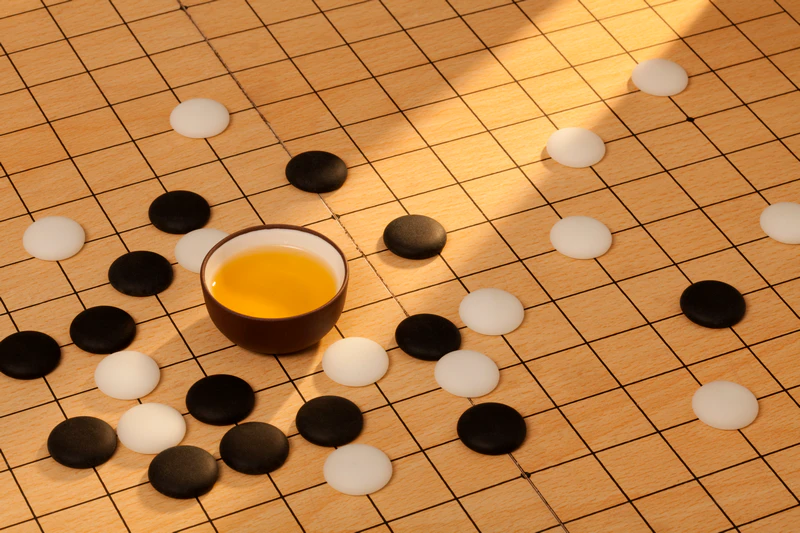
Go is an ancient board game played on a 19-by-19 grid with black and white stones. The rules are simple: players alternately place stones on intersections, capture an opponent’s stones by surrounding them, and win by controlling more territory when play ends.
Beneath those simple rules lies almost unimaginable strategic depth. That made Go an ideal proving ground for modern AI. A decade ago, the game’s blend of clear objectives and staggering complexity placed it at the center of one of artificial intelligence’s defining moments: AlphaGo Move 37.
Researchers led by Demis Hassabis, the CEO of Google DeepMind, had long used games as ideal testing platforms because they offer fast feedback, measurable progress, and adjustable levels of difficulty.
In its early years (2013–2015), DeepMind used classic Atari arcade games such as Breakout to demonstrate that an AI system could learn successful strategies using only what it saw on the screen and whether the score improved, without being given a scripted plan.
When Go became AI’s proving ground
Those experiments set the stage for AlphaGo. Then, in 2016, while facing the world’s strongest Go players, the system began producing lines of play that surprised experts and challenged centuries of established Go thinking.
In March 2016, at the Four Seasons Hotel in Seoul, AlphaGo faced Go legend Lee Sedol in a five-game match. In a bright ballroom, cameras surrounded the board as commentator Chris Garlock and Go professional Michael Redmond analyzed each move for a global livestream. It was here, during game two, that AlphaGo Move 37 appeared.
DeepMind researcher Aja Huang sat at the board, placing AlphaGo’s moves by hand while the system operated remotely. Then came Move 37. The room fell silent. Millions watched as an unfamiliar move appeared—and held.
AlphaGo chose a baffling move—now famous as AlphaGo Move 37—that wasn’t in any Go master’s playbook, one that expanded centuries of collective Go wisdom.
That moment didn’t arrive through brute-force computing power. Unlike chess, Go resists calculation-heavy approaches because its search space is vastly larger. Success depends far more on recognizing patterns and evaluating positions than exhaustively calculating every possibility.
AlphaGo learned this new approach through self-play at massive scale. By playing millions of games against itself, it discovered principles that worked, refined them continuously, and developed strategies no human had explicitly taught it. The result was a series of surprising but sound moves that professional players could study—and in some cases eventually adopt.
The hush in Seoul: AlphaGo Move 37 explained
Why did the room fall silent?
Because a machine had just expanded humanity’s understanding of one of its oldest games. AlphaGo wasn’t simply repeating established knowledge. It was playing to win, and in doing so it revealed ideas that generations of expert players had overlooked.
For a machine, it represented something new: discovering useful ideas through practice rather than merely repeating existing ones.
AlphaGo demonstrated that AI could discover effective new approaches on its own—and then teach humans something they didn’t already know. More importantly, the AlphaGo moment hinted at possibilities far beyond games.
After AlphaGo Move 37, Hassabis concluded that DeepMind’s combination of deep learning, reinforcement learning, and self-play—built around clear goals and rapid feedback—was ready to tackle scientific problems.
The team’s next challenge was one that had frustrated biologists for more than 50 years: predicting a protein’s three-dimensional shape from its amino acid sequence. The result was AlphaFold.
Within about a year, AlphaFold predicted structures for roughly 200 million known proteins—what Hassabis described as “a billion years of PhD time.” It achieved near-atomic accuracy and created a public database with the European Bioinformatics Institute.
For the first time, scientists could look up the three-dimensional shapes of most human proteins almost as easily as consulting an atlas. What had once required years of painstaking laboratory work became an open scientific reference, accelerating drug discovery, enzyme design, and basic biological research.
In our next story, we follow that same breakthrough approach into the laboratory with AlphaFold—the AI system that transformed protein folding from a decades-long scientific puzzle into one of biology’s most powerful research tools.
FAQs
Q1. What exactly was AlphaGo’s “Move 37,” and why did it matter?
A: During game two against Lee Sedol, AlphaGo played an unexpected shoulder-hit known as Move 37. Professional Go players initially considered the move highly unconventional, but it proved remarkably effective and reshaped expert thinking about the game.
Q2. Did AlphaGo win only through brute-force computation?
A: No. Go’s enormous search space makes brute-force search impractical. AlphaGo combined deep learning, reinforcement learning, and self-play to develop powerful pattern recognition and strategic intuition.